

Heat, Cold, and the Case for a Little Stress: What Sauna and Cold Exposure Research Shows
A client mentions, with a mix of curiosity and skepticism, that half the people at their gym now swear by the cold plunge, and a friend will not stop talking about the sauna. They want to know whether any of this is real or just the latest thing. It is a fair question, and it is exactly the kind a health coach is well placed to answer, because underneath the hype there is a surprising amount of solid research, and the practices themselves are simple lifestyle habits a coach can help a client adopt.
Heat and cold exposure are having a cultural moment, and moments invite exaggeration in both directions. Some make the sauna and the cold plunge sound like a cure for everything, while others dismiss the whole thing as a fad. The useful position, and the one a coach can hold with confidence, sits in between. These are real, evidence-backed practices with meaningful benefits and real limits, and the value for a client comes from doing them consistently, sensibly, and safely.
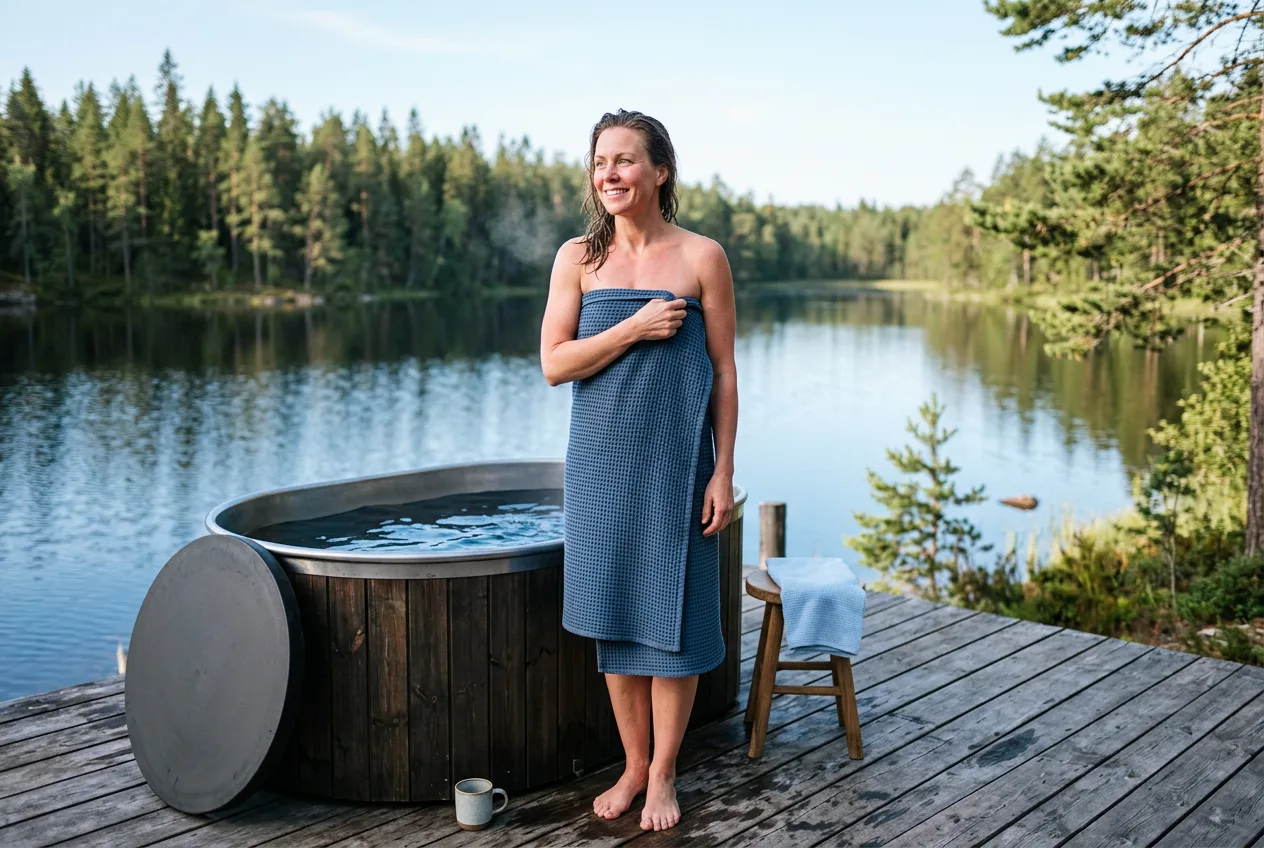
The Case for a Little Stress
The idea underneath both the sauna and the cold plunge is the same, and it is worth understanding, because it explains why a bit of discomfort can be good for a body. It is called hormesis: a small, controlled dose of stress that, rather than harming the body, prompts it to adapt and come back stronger. Exercise is the most familiar example. You stress the muscles and the heart, and in recovering they build more capacity than before. Heat and cold work on the same principle, applying a brief, manageable stressor that switches on the body’s repair and resilience machinery.
In practical terms, that machinery includes a family of protective molecules the body produces under heat stress, sometimes called heat-shock proteins, which help keep other proteins working properly and appear to support the cardiovascular system. The details matter less to a client than the headline, which a coach can deliver plainly: the momentary stress of getting hot or cold is not damage. It is a signal, and the body answers it by getting a little tougher. That reframing turns an uncomfortable few minutes into something a client can understand as an investment rather than an ordeal.
There is one honest caveat built into the word hormesis, and it is a useful one to pass along. The benefit lives in the dose. A little stress prompts adaptation; too much simply causes harm. That is precisely why the coaching around these practices matters, because the goal is never to be as hot or as cold as possible for as long as possible. It is to find the dose that challenges the body enough to prompt a response and no more, and then to repeat it. Understood that way, restraint is not timidity. It is the whole skill.

What the Sauna Actually Does
Start with heat, because it has the deepest research behind it. When a person sits in a sauna, the body works to shed heat: the heart rate climbs, blood vessels widen, and circulation increases in a way that looks, from the heart’s point of view, a lot like moderate exercise. Done regularly, this appears to train the cardiovascular system. The most striking evidence comes from long-running studies of Finnish adults, where more frequent sauna use tracked with lower cardiovascular and all-cause mortality, in a dose-response pattern, where the more often people used the sauna, within reason, the stronger the association.
A coach should be careful with how they frame this, because an association is not the same as proof, and the people in those studies were doing many things right.
But the signal is consistent and biologically plausible, and it lines up with what shows up in smaller experiments: better blood-vessel function, lower blood pressure over time, and a calmer nervous system in the hours afterward. For a client, the honest and motivating summary is that regular sauna use is one of the better-supported lifestyle habits for long-term heart health, and that it doubles as one of the more pleasant ways to unwind.
The heat story does not stop at the heart. Regular sauna use has also been associated with better sleep and steadier mood, and researchers point to the same broad set of responses, the endorphin release, the reduction in low-grade inflammation, the quiet reset of the nervous system, that follow a good session. A coach does not need to promise any of this to a client, and should not, but it helps to know that the appeal of the sauna is not only its long-term numbers. It is also the very real way most people feel afterward, which is often the thing that keeps them coming back.
One honest framing helps a client keep perspective. A sauna raises the heart rate and trains the vessels, but it does not build muscle, load the bones, or burn meaningful energy the way a walk or a workout does. It is a complement to movement, not a substitute for it, and a coach who says so plainly earns trust while steering the client toward both. The most robust results in the research, in fact, tend to show up in people who are already active and add the sauna on top. That is a useful picture to hold: not either-or, but a stack of small, compatible habits that add up over time.
What the Cold Actually Does
Cold is the newer arrival, with a smaller and more mixed body of evidence, which is worth saying plainly. What is well established is the acute response. Step into cold water and the body reacts within seconds: a sharp intake of breath, a jump in heart rate, and a large surge of norepinephrine, the same chemical messenger tied to focus, alertness, and mood. That surge is why people climb out of a cold plunge feeling electric and clear-headed, and why many describe a lift in mood that lasts for hours.
Beyond that immediate hit, the claims get more speculative. Cold exposure does activate brown fat and nudge the metabolism, though a careful review of the research finds the longer-term effects on weight, immunity, and mental health promising but far from settled. This is exactly where a coach earns their keep, by helping a client separate the reliable part, the real and repeatable boost in alertness and mood, from the oversold part, and by keeping expectations honest so the client is not let down when a cold shower does not transform their life.
There is one more nuance a good coach keeps in a back pocket, because clients who train will ask about it. Plunging into cold water right after strength training can blunt some of the muscle adaptations that training is meant to produce, so an athlete chasing gains may want to keep the cold away from the hour after a hard session. It is a small point, but it captures the larger lesson of this whole subject: the same practice can help or hinder depending on the goal and the timing, and matching the tool to the client is the coaching.
Coaching the Habit
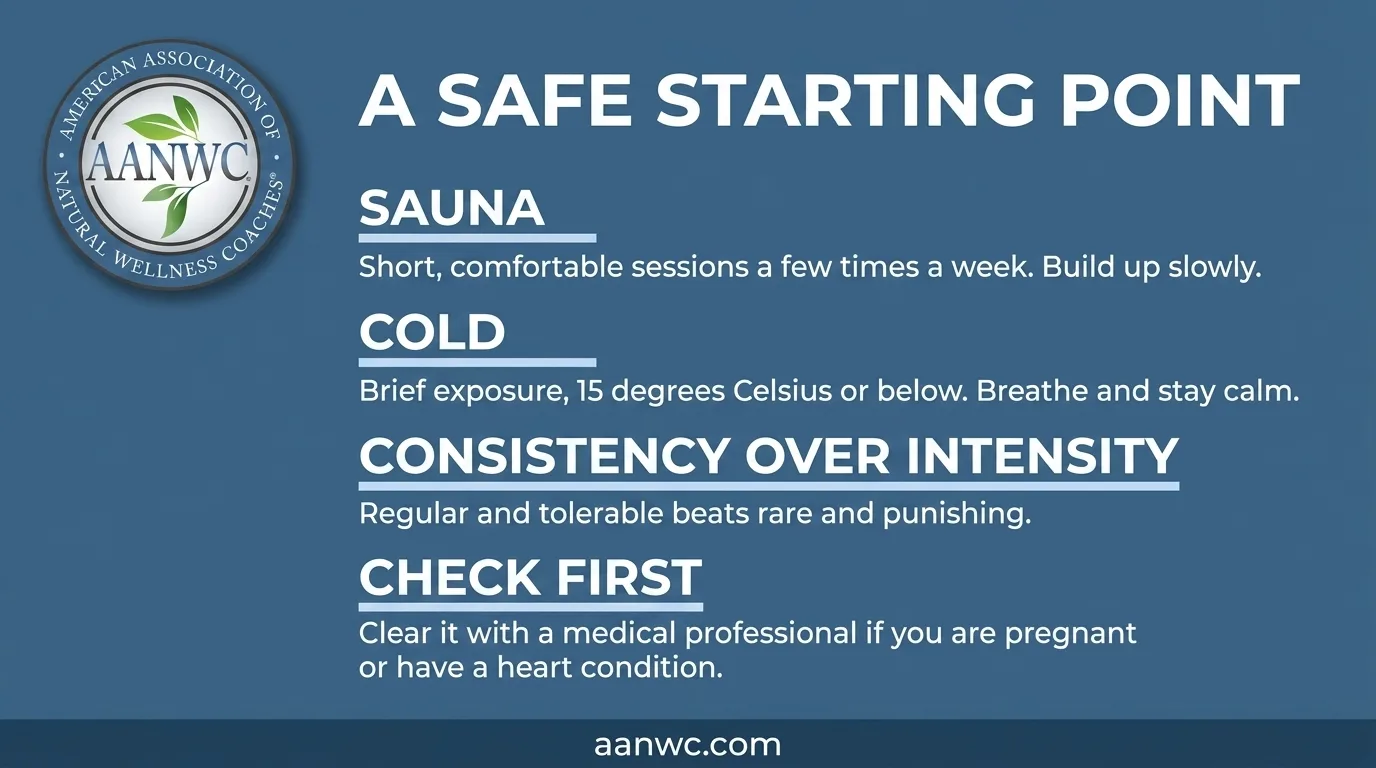
Once a client understands what these practices do and do not do, the coaching becomes familiar territory, because the whole game is consistency, not heroics. The research rewards regularity, not intensity, which is a relief for most clients. A comfortable sauna a few times a week does more good over a year than an occasional session hot enough to be miserable, and a brief, tolerable cold exposure done often beats a punishing one done once and never repeated. The coach’s job is to help the client find a version they will actually come back to.
That means fitting the habit to their life. For one client it is a sauna at the gym after a workout; for another it’s ending the morning shower with thirty seconds of cold. It means starting small and building, so the first experience is a success rather than a shock.
And it means coaching the meaning as much as the method, helping the client notice the lift in mood, the better sleep, the small pride of having done something bracing before the day began, because those felt rewards are what turn a two-week experiment into a habit that holds. None of this requires a protocol from a laboratory. It requires the ordinary craft of helping a person build something into their week and keep it there.
A concrete example makes the coaching visible. Say a client is drawn to the idea but intimidated by the cold. Rather than talking them into an ice bath, a coach might start them with the part that is easy to love, a short sauna after their existing gym sessions, and let the habit take root there. Weeks later, once the routine is familiar, the same client might add ten seconds of cold at the end of a shower, then twenty, building tolerance and confidence together. Some people eventually enjoy alternating heat and cold in the same session. The point is not to arrive anywhere in particular. It is to meet the client where they are and let the habit grow at a pace they will sustain.
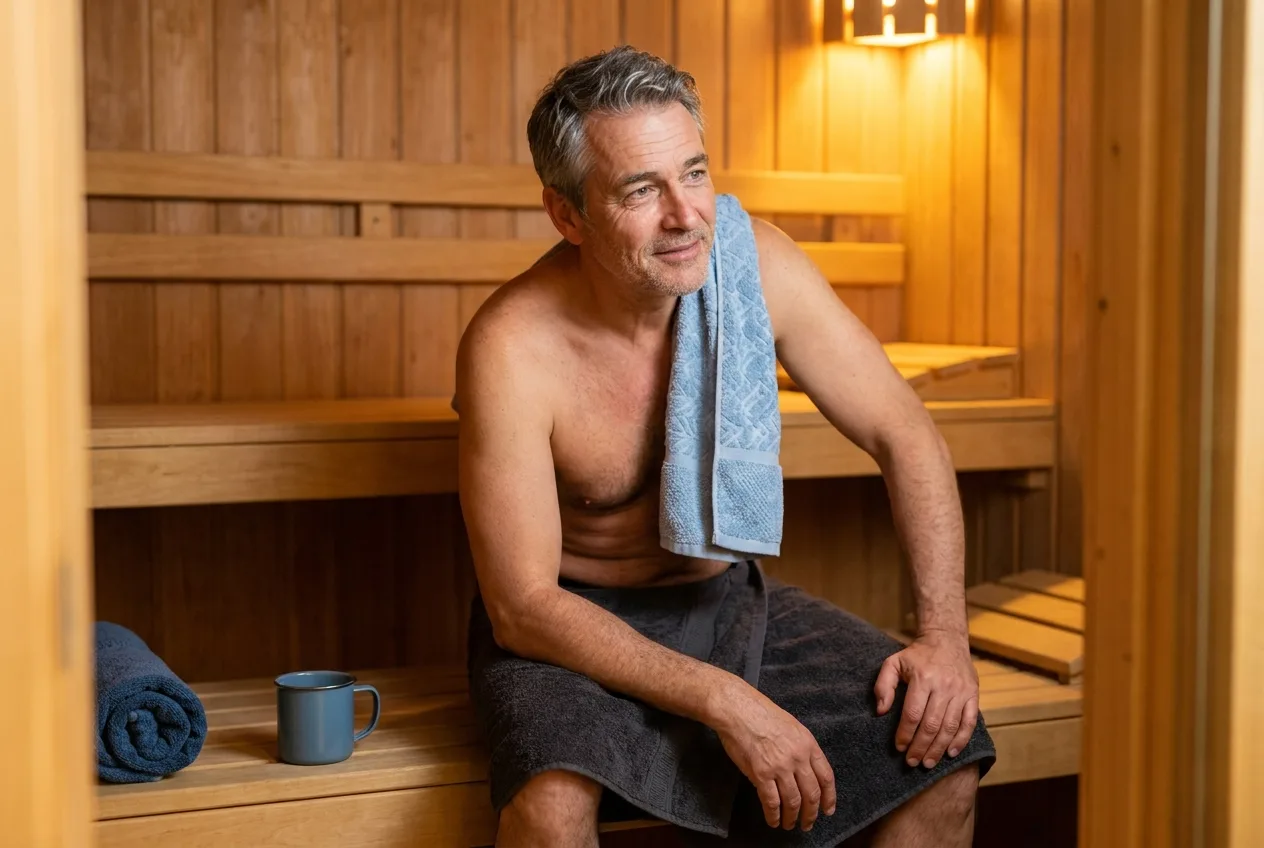
Who Should Be Careful
One quick and important note before a client dives in. Heat and cold both place real, if brief, demands on the heart and circulation, so they are not for everyone without a green light first. A client who is pregnant, who has a heart condition or uncontrolled blood pressure, or who takes medication that affects heart rate or temperature should check with a medical professional before starting, and alcohol and extreme heat or cold never mix. For a healthy adult, the risks are low and the entry is gentle, and the coach’s role is simply to ask the sensible screening question and, when anything gives pause, to point the client toward their doctor before the first session rather than after.
Held inside those simple guardrails, sauna and cold exposure give a coach something genuinely useful: two accessible, low-cost habits with real research behind them and an immediate payoff a client can feel.
They are not magic, and a good coach never sells them as such. But taught well, at the right dose and built patiently into a life, they are a fine example of what coaching does at its best, taking a piece of sound science and turning it into something a person will actually do.
Coaching lifestyle practices like these, translating real research into a habit a client can hold safely and sustainably, is the work of a board-certified health coach who takes the science seriously. ANWCB supports board-certified coaches earning exam-based credentialing who turn findings like these into skills their clients can use.